Thursday, February 7, 2008

paul potts: the average prodigy


I've never seen Simon so surprised. You would think that he's seen just about everything--especially as a judge for American Idol. Well, I guess that Simon would have never considered Paul Potts, an average, odd looking cell phone salesman, to be the next American Idol of the UK.

This fantasy, of being normal and discovering a legendary talent, is one fantasy that many people dream of before they fall asleep. We all want to be remembered, be famous, or do something great with our lives. Every time I watch this video I get chills. These are the kind of chills that are the calling of greatness in every individual. These are chills that feed the yearn to greatness and inspire us to achieve. It is inspiring to know that everyone, especially an average person such as Paul, has a chance. To even imagine that normal people are all around us and have the potential to change the world, promote peace, feed the hungry, or share the passion of opera, is beyond comprehension.

Paul stated in the beginning of the video that his dream was doing what he was called to do. In his case it was singing opera. This brings me to the question: What is my calling? What is your calling? Is it to achieve greatness? Is it to be recored and documented in textbooks? Is it to be remembered forever? I agree with Paul. Our dreams are interwoven into our callings, our desires, our greatness. The key to achieving our dreams and greatness is to fulfill our calling. Paul liked singing opera. That was his greatness--his ability to share music with others. He does it in such a way not only is Simon taken aback, but leads us all to indulge in our fantasies of greatness and become what we are called to be.

Wednesday, February 6, 2008

essay on gary's essay...


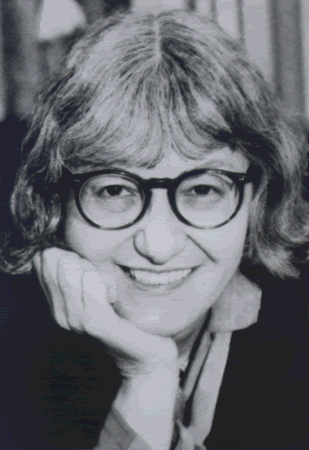
"As Cynthia stated that there it is a free mind at play, and I believe for a genuine essay to be produced or one that has strong voice it does not need any forms of constraints." --Gary Masters

I agree with Gary's as well as Cynthia's statement about the essay. The essay should have no boundaries. It should have no rules, no specific format, and most importantly the essay should not be defined. The essay is an opportunity for the writer to release words on paper, words out loud--without consideration of rules and regulations. This allows the writer to embrace his or her own thoughts and ideas better than someone buried in rules. As Gary and Cynthia stated, it allows the writer to produce a more genuine essay instead of some insignificant redundant copy of previous thoughts. I also think that without a specific format a writer is more willing to be creative with the essay. The essay could include quotes from sources that enhance the writer's ideas and thoughts, as well as poetry or a short biography combined in one writing to capture a person's life story on paper. The lack of specific format also makes it easier for the reader to stay engaged as well as intrigued. It is much more interesting if the reader is unable to predict what the writer is going to say next. It is also easier for the reader to stay awake and engaged in the reading if the writer avoids redundant thesis statements and contentions. However, what I think is most important about the essay is its definition. I think it should be left undefined. It should maintain its flexibility, its freeness, and its mystery to all writers. If the essay were to ever be defined the writer would see himself or herself suddenly denied of free writing--losing a passionate and strong voice as well as limitless boundaries of creativity. The free mind would no longer be at play. It would be a sever detriment to all writers and readers of their work if the essay would obtain boundaries and limitations to its format, style, and purpose.

Thursday, January 31, 2008

quotation from atwan02

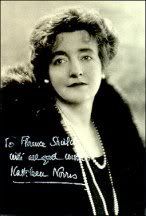
"And to resound means to be filled to the depth with a sound that is sent back to its source. An essay that works is similar; it gives back to the reader a thought, a memory, an emotion made richer by the experience of another. Such an essay may confirm the reader's sense of things, or it may contradict it. But always, and in glorious, mysterious ways that the author cannot control, it begins to belong to the other reader." -Kathleen Norris

I would have never associated essays with the idea of resonance. Whenever I hear the word resonance I automatically think of music. I imagine an enchanting concert hall filled with the rolling waves of music—not an essay. Before I read Norris’s thoughts on the essay, I always considered the essay as just words on paper or an assignment for English class. However, as I made my way through the Antwon reading I came to a realization that an essay is more than words. The essay is a writer conveying messages, facts, opinions, or stories to the reader hoping to stimulate a response. The writer wants the reader to be engaged, aroused, and become involved in the essay. In essence, the writer wants to give back to the reader, to be filled to the depth, as Norris explained. This is one of the reasons I found this particular quote fascinating. There are certain memories of life that an individual remembers best. These can be memories that were a pivotal point in its life or memories that are random but somehow made their way into the memory bank. This would be like remembering what your best friend in first grade brought for show and tell. I believe this is how some essays works. There is no explanation as to how the reader is moved or able to remember how it becomes a permanent part of their life. As Norris explains, it is a glorious mystery. The essay begins to creep slowly, like a musician beginning to play in a concert hall. Then eventually turns into a composition—a concerto. The reader is captivated by the statements, the stories, the sound, and the confirmation that what the essay is attempting to convey is achieved. The reader now possesses part of the essay, and as Norris stated, filled to the depth with sound.


More on Kathleen Norris:
Biography and Works
A Woman of Certain Importance


Thursday, January 24, 2008

test...

link to the course's main page